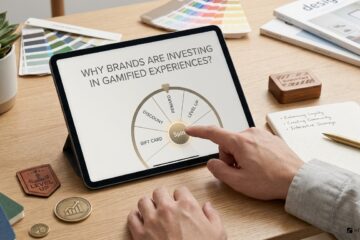
Imagine running a boutique sauce manufacturing business. You are developing a new cucumber-based sauce, but you face a critical question: should the hero herb be dill leaves or coriander? Or perhaps you need to know if your target market prefers a smoky chipotle flavor over a classic thousand island dressing.
Traditionally, you might blast out an email survey with checkboxes. But what happens? The email sits unread, or worse, gets deleted. Consumers are tired of filling out digital paperwork for brands.
Now, imagine a different approach. You launch a quick, interactive game called “This or That.” Users are presented with crisp visuals on their screens. With a simple click, they choose: Dill Leaves or Coriander? Chipotle or Thousand Island? It takes thirty seconds, feels like a mini-break in their day, and rewards them with a 10% discount code upon completion. Suddenly, you aren’t begging for data! Customers are happily handing you their exact flavor preferences because the process itself is engaging. This is the core of the next big shift in marketing: the transition from static content to gamified experiences.
Sounds interesting? Here’s a mini-interactive proof. Instead of reading about gamification in marketing, experience one yourself. Scroll down, click below “play game” button to see how a simple interaction can turn passive audiences into active participants.
Easing Anxiety: Gamification in HR and Operations
This shift stretches far beyond customer-facing product feedback. Consider an HR department preparing to conduct aptitude tests for a fresh batch of candidates.
Standard corporate testing environments are well-known for triggering high anxiety and fear. A stressed candidate rarely performs at their true potential, which means organizations often miss out on great talent due to test-day nerves.
To solve this, forward-thinking HR managers are replacing dry, intimidating assessment sheets with interactive challenges like “The Maze Runner” or “Scenario Puzzles.” Instead of staring at a ticking timer on a blank page, candidates navigate an interactive, logical puzzle where they must sort operational tasks to unlock the next room.
The game is so intriguing and immersive that candidates stay completely locked into the experience. They do not look at their mobile phones for help, nor do they search online or use AI tools for answers, because they are entirely involved in solving the challenge. The underlying logic still tests their critical thinking, problem-solving, and speed. However, because it looks and feels like a game, the candidate’s psychological guard drops. The anxiety melts away, the experience becomes relaxing, and the organization gets an authentic, accurate measure of the candidate’s true capabilities.
Want to bring gamified assessments or campaigns to your business?
From Farming to Finance: Simplify Choices
Let’s look at another real-world scenario: a local mushroom cultivator specializing in premium varieties.
The farmer is planning his next cultivation cycle and needs to understand market demand. Which mushroom variety should it grow more of? Do consumers prefer button mushrooms, oyster mushrooms, or shiitake mushrooms? Traditional surveys and feedback forms often receive limited responses, leaving the cultivator with incomplete insights.
Instead, the cultivator launches a quick survey game called “What’s on Your Plate?” The game will explore mushroom preferences, cooking habits, dining occasions, and purchase intent. The experience takes less than a minute to complete and feels more like a fun challenge than market research.
Upon completion, participants unlock a personalized recipe card based on their responses.
The result? Consumers receive inspiration for their next meal, while the cultivator gains valuable demand insights revealing which mushroom varieties are most popular, which are gaining interest, and where future cultivation efforts should be focused.
To visualize this better, why not experience it for yourself? Scroll down, click the Play button and see how a simple interactive game can help businesses uncover valuable customer insights in just a few clicks.
Whether you realized it or not, the game just demonstrated the central idea of this article. Through a simple interaction, you made choices and revealed valuable insights without filling out a form or answering a survey. No lengthy questionnaires. No market research fatigue. Just interaction.
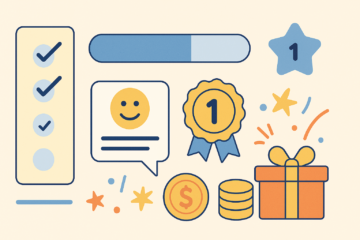
This is precisely why gamified experiences are becoming such a powerful marketing tool. They move people beyond passive consumption and into active participation what Kevin Werbach, in For the Win, calls the “Engagement Hierarchy.” He highlights three stages that drive successful gamification:
- Definition: Giving them a clear, actionable task.
- Feedback: Showing them immediate, real-time progress.
- Motivation: Providing an emotional or physical reward.
Modern game mechanics build this exact loop directly into an SMB’s daily operations.
The Ultimate Engine for Long-Term Brand Loyalty
For small and medium businesses, gamification is the ultimate tool to level the playing field against massive corporate budgets. Beyond solving everyday operational bottlenecks, it addresses the biggest challenge in modern marketing: long-term memory.
Consumers may forget an image or a static text ad within seconds of scrolling past it. However, when they actively engage with a gamified challenge, that experience stays in their minds for a remarkably long time. This deep emotional connection forms the bedrock of true brand loyalty. It creates a memorable interaction that customers look back on fondly, ensuring they choose your business over competitors time and time again.
- In Retail: Moving away from flat, ignored discount banners toward a “Scratch and Win” layout where users reveal their coupons through a moment of digital chance.
- In Dining: Casual dining spots and cafés utilizing quick, table-side “Guess the Ingredient” trivia games to keep customers entertained and patient while their orders are being prepared in the kitchen.
- In Services: Fitness studios or boutique salons using “Progress Streaks” to encourage clients to book their next sessions consistently to unlock VIP perks.
The Bottom Line: Build Experience Effortlessly
The market has outgrown passive scrolling. Whether you are selling gourmet sauces, evaluating job candidates, or harvesting fresh mushrooms, your audience wants to be involved, not just sold to.
The best part? Deploying these interactive experiences no longer requires a massive software development budget or months of complex coding.
For SMBs looking to quickly build, test, and execute engaging interactive campaigns, platforms like Playly.ai make the process simple. You can easily develop and launch templated games like This or That, Trivia Quests, or Scratch Cards that capture customer data and drive immediate engagement in just a few clicks.
However, if your business requires a completely unique, exclusive, and tailor-made game built around a highly specific brand narrative, you can reach out directly to the team at nFaktor.
The era of shouting at your audience through static ads is officially over. The age of active participation is here.
Are you ready to let your audience play?